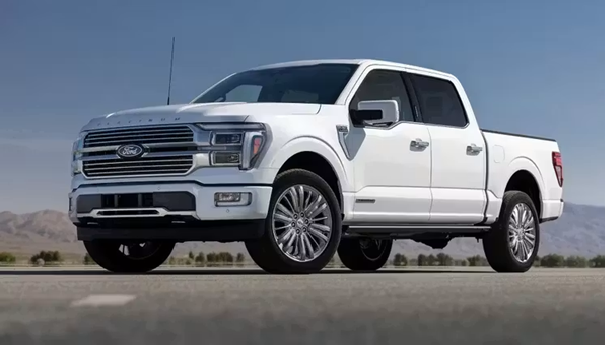
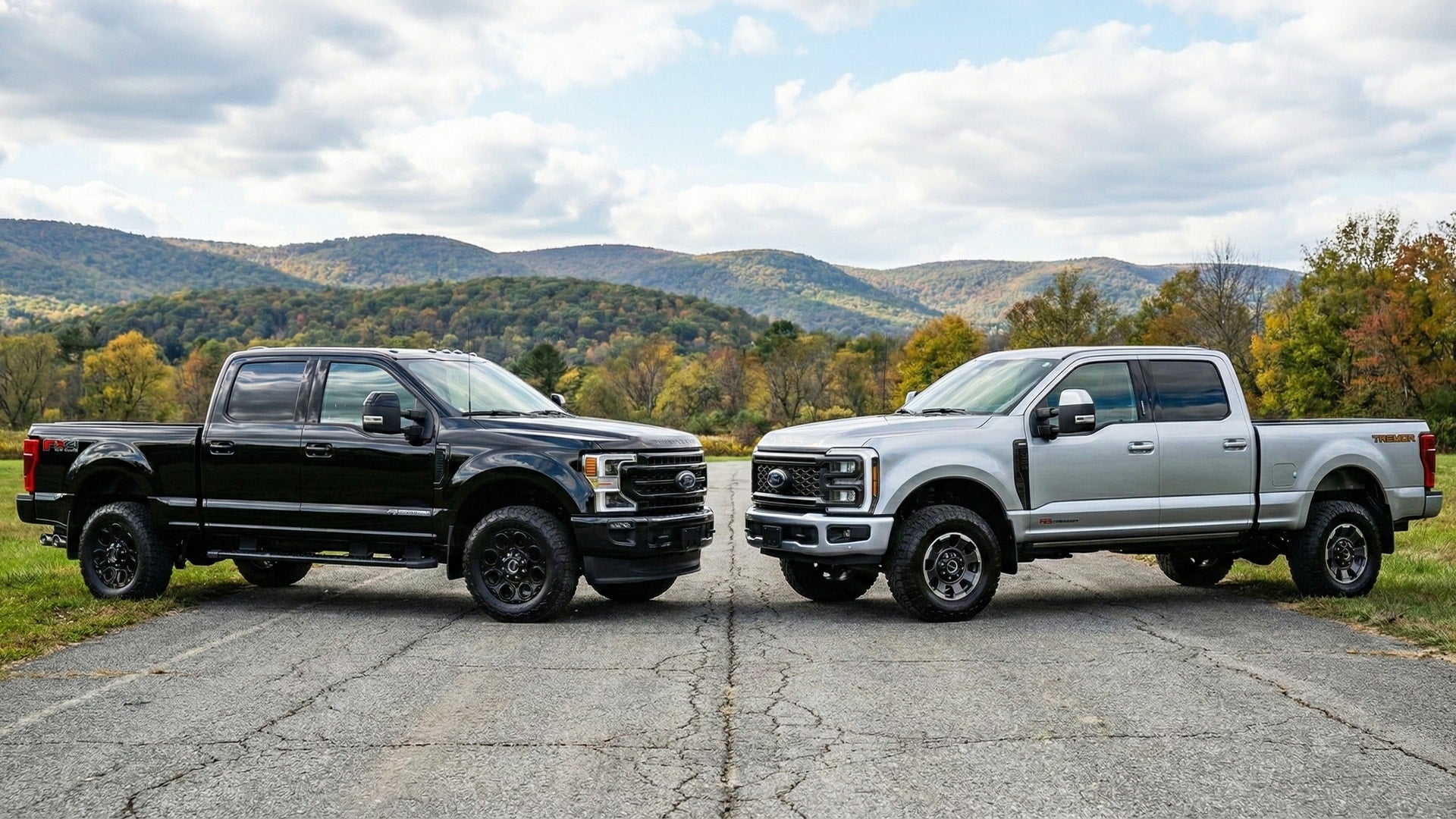
When your workload demands more than a light-duty pickup, the Ford Super Duty lineup offers the strength and flexibility to take on serious towing, hauling, jobsite, and recreational needs. For many shoppers in Paris, TX, the decision comes down to two popular choices: the Ford F-250 and Ford F-350.
Both trucks deliver heavy-duty capability, available gas and diesel power, and useful towing technology. The biggest question is how much capability you actually need. This Ford Super Duty buying guide explores the differences between the F-250 and F-350 to help you choose the truck that makes sense for your workload.
Ford F-250 vs. F-350: What's the Difference?
The F-250 and F-350 share many of the qualities that define the Ford Super Duty lineup, including a high-strength steel frame, powerful engine choices, multiple cab and bed configurations, and available technology designed to make towing easier.
The primary difference is capability. The F-250 provides substantial towing and hauling strength while remaining a practical choice for drivers who don't need the higher ratings available with an F-350. The F-350 builds on that foundation with configurations designed for heavier payloads and trailers, including available dual rear wheels.
| Consideration | Ford F-250 | Ford F-350 |
|---|---|---|
| Best For | Heavy-duty capability with everyday versatility | Higher-capacity towing and hauling demands |
| Gas & Diesel Options | Available | Available |
| Single Rear Wheel | Available | Available |
| Dual Rear Wheel | Not available | Available |
| Ideal Use | Work trailers, equipment, boats, RVs, and everyday heavy-duty use | Larger trailers, fifth wheels, goosenecks, and demanding commercial use |
Actual towing and payload ratings vary by configuration, engine, drivetrain, equipment, passengers, cargo, and other factors. Always verify the ratings of the specific truck and trailer combination you plan to use.
Ford Super Duty Engine Options
One reason to consider a Ford Super Duty is the range of available powertrains. For 2026, the lineup offers four engine choices, allowing shoppers to balance purchase needs, torque, towing capability, and intended use.
- 6.8L gas V8: A capable gas-powered option for drivers who need Super Duty strength without necessarily requiring diesel power.
- 7.3L gas V8: Provides additional gas-engine performance for more demanding workloads.
- 6.7L Power Stroke V8 Turbo Diesel: Delivers substantial low-end torque for towing and heavy-duty applications.
- 6.7L High Output Power Stroke V8 Turbo Diesel: Designed for drivers seeking the strongest available diesel performance in the lineup.
All four engines are paired with a 10-speed automatic transmission. Choosing the right engine should depend on more than the largest available number. Think about how frequently you tow, the weight of your trailer, how much payload you typically carry, and whether the truck will spend most of its time working or serving as an everyday vehicle.
When Does an F-250 Make Sense?
For many heavy-duty truck shoppers, the Ford F-250 offers an appealing balance.
It provides considerably more capability than a typical light-duty pickup while offering multiple engines, cab configurations, bed options, and trim levels. An F-250 can make sense for drivers towing work trailers, equipment, larger boats, campers, and other substantial loads without needing the additional capacity of an F-350.
The F-250 can also be an attractive option when the truck has to perform multiple roles. If your Super Duty will tow or haul during the week but also handle errands, highway trips, or everyday transportation, choosing the capability you actually need can be more practical than automatically moving to the heaviest configuration available.
When Should You Consider an F-350?
If your towing and hauling needs are more demanding, start your search with the Ford F-350.
The F-350 is designed to accommodate higher-capacity applications and adds the option of a dual-rear-wheel configuration. Having two wheels on each side of the rear axle can provide greater stability, weight distribution, and capability for particularly heavy loads.
An F-350 may make more sense if you regularly tow large fifth-wheel or gooseneck trailers, transport heavy equipment, carry substantial payloads, or need a truck for demanding agricultural or commercial work.
Understanding Super Duty Towing Capacity
Ford Super Duty capability can be substantial. Properly configured 2026 Super Duty trucks can reach maximum available ratings of up to 40,000 pounds for gooseneck towing, 35,000 pounds for fifth-wheel towing, and 30,000 pounds for conventional towing.
Those numbers represent maximum ratings for specific configurations, not the capability of every F-250 or F-350. Your truck's actual rating depends on several factors, including:
- F-250 or F-350 configuration
- Gas or diesel engine
- Single or dual rear wheels
- Cab and bed configuration
- Two-wheel drive or four-wheel drive
- Axle ratio
- Towing equipment and packages
- Passengers, cargo, and accessories
This is why shopping for a heavy-duty truck should start with your actual towing requirements. Knowing your trailer's loaded weight and how much cargo you'll carry can help narrow down the right Super Duty configuration.
Gas vs. Diesel Super Duty: Which Should You Choose?
Choosing between a gas and diesel Super Duty is another important part of the buying process.
A gas-powered F-250 or F-350 can be a practical fit for drivers who need heavy-duty capability but don't spend most of their time towing at the upper end of the truck's capacity. Gas engines may also appeal to shoppers who prioritize a simpler powertrain choice for a mix of work and everyday driving.
The available Power Stroke diesel engines become especially compelling for frequent heavy towing. Their substantial torque output is well suited for moving large trailers and loads, particularly for drivers who regularly tow over long distances.
Instead of assuming diesel is automatically the right choice for every Super Duty buyer, consider how often you'll use the additional capability. The team at Paris Ford can help you compare configurations based on what you actually plan to tow and haul.
Super Duty Technology That Can Make Towing Easier
Capability isn't only about horsepower, torque, and maximum ratings. Ford offers available technology designed to make connecting, monitoring, and maneuvering with a trailer more manageable.
Depending on configuration and equipment, available Super Duty towing technologies can include features such as Pro Trailer Backup Assist, Pro Trailer Hitch Assist, Onboard Scales with Smart Hitch, and camera technology that can provide additional visibility around the truck and trailer.
These features can be particularly useful for drivers who tow frequently, helping turn raw capability into a truck that's easier to use in real-world situations.
F-250 or F-350: Which Super Duty Is Right for You?
The better choice comes down to how much truck your workload requires.
Consider an F-250 if:
- You need substantial towing and hauling capability.
- You want a choice of gas or diesel power.
- Your trailer and payload requirements fit comfortably within an F-250's ratings.
- You want heavy-duty capability while maintaining everyday versatility.
Consider an F-350 if:
- You regularly tow or haul particularly heavy loads.
- You need additional payload or trailer capacity.
- You want the option of a dual-rear-wheel truck.
- You tow a large fifth-wheel or gooseneck trailer.
- Your work requires greater capability than an F-250 configuration provides.
The goal isn't simply to buy the truck with the biggest capability number. It's to select a Super Duty with the appropriate engine, drivetrain, configuration, payload rating, and towing capacity for what you plan to do.
Find Your Ford Super Duty in Paris, TX
When you're ready to compare Ford Super Duty trucks in person, Paris Ford can help you explore configurations based on your towing, hauling, work, and everyday driving needs.
Start by browsing our available Ford F-250 inventory and Ford F-350 inventory. You can also use our payment calculator to estimate monthly payments and learn more about available financing options.
Learn more about why drivers choose Paris Ford, or schedule a test drive to experience a Super Duty firsthand. If you have questions about a particular truck or need help determining which configuration fits your needs, contact Paris Ford and our team can help you compare your options.
Ford Super Duty F-250 vs. F-350 FAQs
What is the main difference between the Ford F-250 and F-350?
Both are part of the Ford Super Duty lineup, but the F-350 is designed to accommodate higher-capacity towing and hauling applications. The F-350 is also available with a dual-rear-wheel configuration, while the F-250 uses a single-rear-wheel setup.
Should I buy an F-250 or F-350 for towing?
That depends on the loaded weight and type of trailer you plan to tow, along with passengers, cargo, and equipment. An F-250 provides substantial capability for many applications, while an F-350 may be appropriate when higher towing, payload, fifth-wheel, or gooseneck capacity is required.
Does Ford Super Duty offer a diesel engine?
Yes. The 2026 Ford Super Duty lineup offers both the 6.7L Power Stroke V8 Turbo Diesel and the 6.7L High Output Power Stroke V8 Turbo Diesel, along with two gas V8 options.
Can I get a Ford F-350 with dual rear wheels?
Yes. The Ford F-350 is available in dual-rear-wheel configurations. A dually can provide additional stability and capability for drivers towing or hauling particularly heavy loads.
Where can I shop for Ford Super Duty trucks in Paris, TX?
Paris Ford offers Ford Super Duty trucks in Paris, Texas. Shoppers can compare available F-250 and F-350 models online or visit the dealership to explore engines, configurations, towing equipment, and features in person.